
Downsizing Sentimental Items
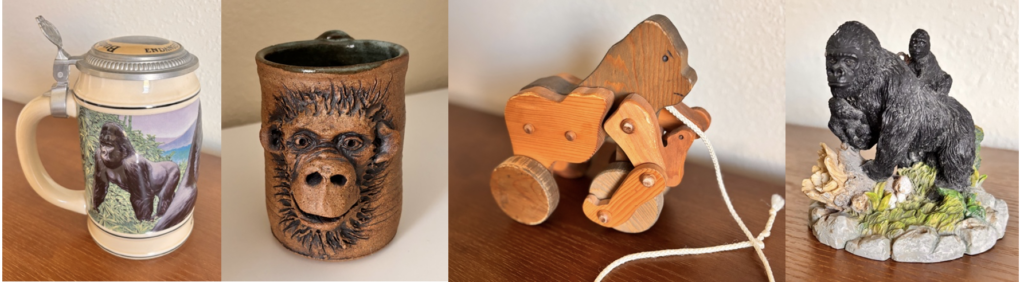
I grew up with gorillas. They were all over my house: gorilla mugs, stuffed animals, statues, and even a hanging fern plant in the shape of a gorilla swinging through the jungle. There were gorilla aprons, blankets, serving ware, grilling tools, and one very disturbing pencil sharpener my sister bought from SkyMall. There was even a talking plush astronaut gorilla that repeated phrases like, “Houston, more bananas please!”
My parents ran a business named after a gorilla with a gorilla logo, so collecting them naturally followed. In high school, my friends thought my house was a little odd—and they were right; it was weird, but gorillas were special to my family.
After my parents retired, they moved to a beach home in North Carolina. Many of the gorillas didn’t make the move. Aside from a plush gorilla dressed as a sailor, most didn’t fit beach decor. But several were kept anyway—not because they matched the curtains, but because they meant something to us.
Recently, my parents sold their home in North Carolina and moved to Minnesota. They felt it was time to find a place with continuing care options and better access to medical services. I am thrilled they came here, but I see the inherent heartbreak in this transition. As my dad said, every other move in their lives was toward something better—an exciting new chapter. This one required accepting that they are at a point in life where they need access to necessary, if less exciting, things.
Their new home is much smaller than the one they left, requiring thousands of hard decisions about what comes to Minnesota and what ends up in a North Carolina thrift store. Anyone facing this situation knows there is no correct way to edit sentimental items. Most of us will face this someday as our lives change. If you or a loved one are going through this transition, here are a few ideas that might make it a little easier:
- Start with low-hanging fruit. The ugly gorilla pencil sharpener was an early cut. It was funny, but not something anyone actually wanted on their desk.
- Identify a goal before you start. Give yourself a clear target. If you have 20 feet of bookshelves in your current home but will only have 5 in your new one, you know you need to cut 75% of your collection. If you have 15 feet of shelf space, you only need to trim 25%.
- Focus on what to keep, not what to toss. What are your absolute favorites? Think of yourself as a curator, selecting the best representation of a memory or person.
- Photograph items you love but can’t keep. Create a binder of photos alongside short stories about why those items are important to you. It’s a great way to hold onto the memory without keeping the clutter.
- Pass items to loved ones with no strings attached. Remember that once an item is given away, the recipient can do with it as they please. Hopefully they will love and cherish it, but the goal is to share memories—not burden loved ones with clutter.
- Separate the memory from the object. Remind yourself that the person or moment you hold dear doesn’t live inside a physical item; it lives in your memories and feelings.
- Reward yourself as you reach milestones. Take time to pause and toast to the people or moments you’re remembering along the way.
Christine Daves
Certified Professional Organizer, Think Organized
www.Think-Organized.com